Dachang has finally fallen to the Japanese. It was the last suburban town lying between the Japanese forces and the Chinese fortified within Shanghai.
The two sides engaged in many seesaw battles over the past few weeks. The frontline of the battle has only managed to move 5 Kilometers with the Japanese making the gains. The Chinese have so far, never been able to capitalize 0n Japanese vulnerabilities.
The fighting has been so intense that the rate of casualties an hour for the Chinese has reportedly been in the thousands. Some divisions have been wiped out in a matter of days.
On October 25th, however, Dachang fell to the Japanese. In the course of last night, the Chinese began to withdraw from Shanghai, particularly its downtown which they've held for the better part of three months.
Saturday, October 27, 2007

Saturday, October 6, 2007
US President calls for Quarantine
The President of the United States of America, Franklin Delano Roosevelt, gave a speech in Chicago yesterday. In it, he proposed a "quarantine of the aggressor nations" such as Japan and Italy.
The prevailing political thought right now in the United States is one of neutrality and isolationism. The Neutrality Act, signed on August 31, 1935, forbid the US from shipping arms of ammunition to Italy or Abyssinia, though that crisis has ended.
Mr. Roosevelt seems to be suggesting economic measures be taken against aggressor nations rather than reacting to aggression with aggression. In other words, put water on the fire, not more fire!
The prevailing political thought right now in the United States is one of neutrality and isolationism. The Neutrality Act, signed on August 31, 1935, forbid the US from shipping arms of ammunition to Italy or Abyssinia, though that crisis has ended.
Mr. Roosevelt seems to be suggesting economic measures be taken against aggressor nations rather than reacting to aggression with aggression. In other words, put water on the fire, not more fire!
Wednesday, October 3, 2007
The Chinese withdraw to keep Dachang
Since the fall of Luodian, the frontline of the battle has moved southward to the town of Dachang (大場). There the Chinese hope to maintain some sort of continued communication between themselves the the troops in downtown Shanghai.
The Japanese have increased their numbers to 200,000 given the intensity they faced from 300,000 Chinese at Luodian. Chiang Kai-shek mobilized whatever troops he could scrape up for the defense of Dachang.
After invading the town of Liuhang, the Japanese have managed to push the frontline back further to the Yunzaobin River (蘊藻濱).
The Japanese have increased their numbers to 200,000 given the intensity they faced from 300,000 Chinese at Luodian. Chiang Kai-shek mobilized whatever troops he could scrape up for the defense of Dachang.
After invading the town of Liuhang, the Japanese have managed to push the frontline back further to the Yunzaobin River (蘊藻濱).
Monday, October 1, 2007
Luodian falls

Despite numerical supremacy, the outgunned Chinese have proven to be no match for the Japanese Navy and the firepower the Japanese forces have employed thus far.
The fighting at Luodian has been intense. The Chinese seemed to refuse to change their tactics despite the technological superiority of the Japanese.
There are few Chinese left. It is estimated that over 50% of the Chinese troops sent there to hold the Japanese back have perished. The Chinese have been forced to withdraw from Luodian.
It has been reported that Luodian is now being call the grinding mill of flesh and blood.
Wednesday, September 12, 2007
The Battle moves to Luodian
The Chinese have now taken up strategic positions around Luodian (羅店) in hopes of stopping the Japanese forces. This small town is an important connection between the recently fallen Baoshan and downtown Shanghai.
The Chinese troops have actually managed to increase their numbers. They now outnumber the Japanese troops 3 to 1.
The Chinese troops have actually managed to increase their numbers. They now outnumber the Japanese troops 3 to 1.
Sunday, September 9, 2007
Continued fighting in Shanghai
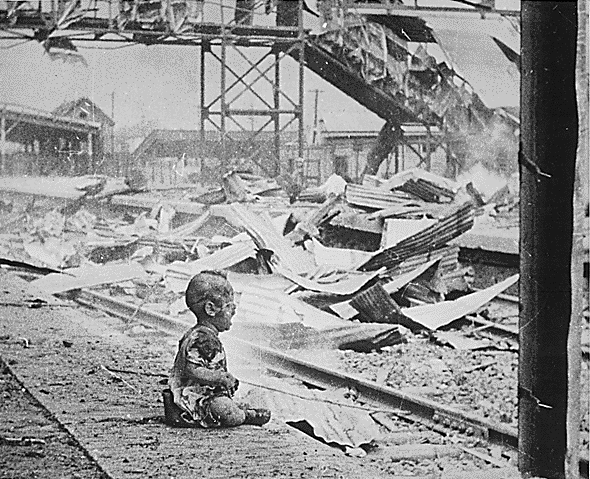 The Chinese have fought valiantly against the Japanese invasion at the port of Shanghai. They lack many of the weapons needed to beat back the amphibious assault and have mostly small arms to work with.
In many of the smaller coastal towns the Japanese have managed to gain control during the day with aid from Naval bombardments. Chinese counter attacks have then been able to regain control of many of these towns in the night.
Recently, on September 6th, the town of Baoshan. The 98th Division was ordered to protect the town. One particular battalion as reportedly suffered such losses that only one man remains alive.
Saturday, August 25, 2007
Japanese Reinforcements to Shanghai
Japan has now sent more troops to the city of Shanghai. This port city represents a great deal of importance to imperial Japan. The Japanese Expeditionary Force is led by Iwane Matsui and they landed at Liuhe, Wusong and Chuanshakou on August 23rd.
Chang Kai-shek seems to have anticipated an assault on these vulnerable coastal districts. He has reinforced them with the Chinese 18th Army. The Japanese Navy is also using its bombardment abilities to the fullest extent.
Chang Kai-shek seems to have anticipated an assault on these vulnerable coastal districts. He has reinforced them with the Chinese 18th Army. The Japanese Navy is also using its bombardment abilities to the fullest extent.
Thursday, August 23, 2007
The Battle for Shanghai
 Throwing the full weight of the imperial Japanese military, China's glorious city Shanghai has come under attack in the past fortnight.
The Chinese expected something after a Japanese Lieutenant Oyama and some Japanese Marines were discovered and shot on August 9th. The General Consul apologized for the incident. It is unclear if the Marines were acting on their own or from orders from superiors. The Japanese, nevertheless, stood firm in demanding the Chinese dismantle their protective barriers around Shanghai.
Not only did the Chinese not submit to this, Chiang Kai-shek increased the Chinese troops in Shanghai beginning August 11th.
Two days later, the Chinese Peace Preservation Corps exchanged small arms fire with Japanese troops in the Zhabei, Wusong, and Jiangwan districts of Shanghai. Following this at 3 PM, local time, the Japanese crossed the Bazi Bridge (八字橋) and began attacking. China's 88th Division returned the attack.
The Following day, Chiang Kai-shek's orders, Zhang Zhizong had the Chinese airplanes begin bombing Japanese targets with the Chinese ground forces also going on the offensive at 3 PM on that day.
On August 16, Zhang Zhizhong ordered his men to take the streets surrounding the Japanese strongholds, rather than assaulting them head-on. Every time a street was successfully cleared, the Chinese would set up sandbag blockades and set fire to allow the Japanese no escape. The tactic was successful as the Chinese were able to destroy many emplacements and outposts in a single day. However, the Japanese then deployed tanks and were able to repel Chinese attacks in the broad streets. The Chinese also ran into the same problem of the lack of heavy weapons to destroy the bunkers easily.
Thus, on August 18, the attack was called off. But in the meantime, Chen Cheng reached the frontlines to discuss the situation with Zhang Zhizhong. They decided to send the newly arrived 36th Division into the fray, by attacking the Hueishan (匯山) docks on the northern side of the Huangpu River. Meanwhile, the 87th Division broke through Japanese lines at Yangshupu, and pushed onto the Hueishan docks along with the 36th Division.
On August 22, the tanks of the 36th Division reached the docks, but were not able to hold the position for long. The Chinese troops were trained insufficiently in coordinating infantry-tank tactics, and the troops were not able to keep up to the tanks' speed. The tanks were vulnerable to Japanese anti-tank weapons and artillery in close quarters and became useless when they entered the city center. The few troops who accompanied the tanks through the city blocks were then trapped by Japanese road blockades and annihilated by flamethrowers and intense machine gun fire. While the Chinese almost succeeded in pushing the Japanese down the Huangpu River, the casualty rate was exceedingly high. In the night of August 22 alone, the 36th Division lost more than ninety officers and a thousand troops.
Most recently, on August 22, the Japanese 3rd, 8th, and 11th Divisions made an amphibious assault under cover from naval bombardments and proceeded to land in Chuanshakou (川沙口), Shizilin (獅子林), and Baoshan (寶山), towns on the northeast coast some fifty kilometers away from downtown Shanghai. Japanese landings in northeast Shanghai suburban areas meant that many Chinese troops, who were deployed in Shanghai's urban center, had to be redeployed to coastal regions to counter the landings. Thus, the frontline has been lengthened from metropolitan Shanghai along the Huangpu River to the northeast coastal districts. The Chinese offensive in the urban center has come to a halt, and the fight in downtown Shanghai essentially has become a static battle with both sides suffering heavy losses and making minimal changes in the frontline. The Chinese divisions have been able to hold onto Zhabei, Jiangwan, and other downtown positions.
Thursday, June 14, 2007
Communism banned in Swiss state of Geneva
Geneva has banned the Communist Party from politicking in the canton. Small fascist groups have been causing political squabbles in the largely neutral nation since 1932.
Tuesday, May 29, 2007
Conservative Chamberlain becomes Prime Minister
Arthur Neville Chamberlain, Chancellor of the Exchequer, has been elected leader of the Conservative Party of Britain. 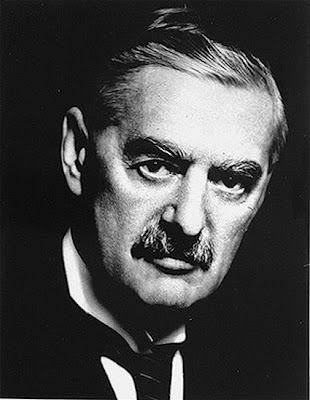 He uses in middle name in informal relations. Arthur is rarely used.
In the wake of the abdication, Prime Minister Stanley Baldwin resigned. Upon his resignation, Baldwin advised the newly coronated King to call for Chamberlain.
Shortly after taking office, the new Prime Minister has removed Lord Walter Runciman from his post. This has deeply angered Lord Runciman, a member of the Liberal Party. He offered Lord Runciman the Lord Privy Seal but this was declined.
Also, Chamberlain has advised cabinet members to make proposals for two-year programmes to him in the very near future. It seems the government may be changing after all. For the better is anyone's guess.
 He uses in middle name in informal relations. Arthur is rarely used.
In the wake of the abdication, Prime Minister Stanley Baldwin resigned. Upon his resignation, Baldwin advised the newly coronated King to call for Chamberlain.
Shortly after taking office, the new Prime Minister has removed Lord Walter Runciman from his post. This has deeply angered Lord Runciman, a member of the Liberal Party. He offered Lord Runciman the Lord Privy Seal but this was declined.
Also, Chamberlain has advised cabinet members to make proposals for two-year programmes to him in the very near future. It seems the government may be changing after all. For the better is anyone's guess.
Thursday, May 17, 2007
Jews excluded from Professional Associations
In Romania, a measure largely illegal, bars all Jews from Professional Associations such as those for physicians, businessman and attorneys. For some professions such legal ones, being accepted into a professional association is required to actively practice that profession.
Romania will likely see a shortage of practicing physicians in the near future.
Romania will likely see a shortage of practicing physicians in the near future.
Monday, May 14, 2007
German Jews can't play Beethoven
A new decree forbids Jews from playing music composed by Mozart or Beethoven during German Cultural events. Being a musician is not an uncommon profession for many Jews. It may be another way to prevent Jews from making a living in their chosen profession and force them into poverty.
Beethoven and Mozart are both highly revered and honored Germanic composers. Mozart it may be noted was from Salzburg, Austria and was not a subject of the Holy Roman Empire but of the Hapsburg Empire. In addition, Beethoven spent much of his lifetime in Austria. Neither would have spent much time caring about their nationality as Germans.
Beethoven and Mozart are both highly revered and honored Germanic composers. Mozart it may be noted was from Salzburg, Austria and was not a subject of the Holy Roman Empire but of the Hapsburg Empire. In addition, Beethoven spent much of his lifetime in Austria. Neither would have spent much time caring about their nationality as Germans.
Thursday, May 10, 2007
Jews can't get degrees
Another measure decreed by the Nazis makes it impossible for Jews to be given degrees even if they have earned them. The rational behind this is unknown. Universities all over Germany are unsure if the Jewish students can or even should continue to matriculate.
Monday, April 30, 2007
Neutrality Renewal Rushed through Congress
The Neutrality Act was up for its second renewal. It was due to expire at midnight tonight. Both houses of Congress pass extensions of the Act.
In the House, there was not a single dissenting vote. In the Senate, there were those who voiced concern. It eventually passed in the Senate with a vote tally of 41-15. There were no abstentions.
Under the legislation adopted today, the President could proclaim also the "placing of restrictions on the shipment of certain articles and materials in the addition of arms, ammunition or implements of war from the United States, to belligerent states or a state where in civil strife exists, is necessary to promote the security or to preserve the peace of the United States or to protect the life of the citizens of the United States."
However, the resolution leaves to the discretion of the President the finding that the "cash and carry" step is necessary.
There was apprehension of the "cash and carry" clause. Mr. Vandenberg objected to the discretion which he saw as written all through Pittman's compromise resolution, on the ground that "the real war decision, so far as we are concerned is actually made when we choose our neutrality formula".
in the House there was virtually no debate.
The National Council for the Preparation of War issued a statement from its headquarters expressing gratification at the passage of the legislation. In the statement, the Council said "each neutrality law passed by Congress is stronger that last one, showing the determined pressure of the American people for protection against war."
In the House, there was not a single dissenting vote. In the Senate, there were those who voiced concern. It eventually passed in the Senate with a vote tally of 41-15. There were no abstentions.
Under the legislation adopted today, the President could proclaim also the "placing of restrictions on the shipment of certain articles and materials in the addition of arms, ammunition or implements of war from the United States, to belligerent states or a state where in civil strife exists, is necessary to promote the security or to preserve the peace of the United States or to protect the life of the citizens of the United States."
However, the resolution leaves to the discretion of the President the finding that the "cash and carry" step is necessary.
There was apprehension of the "cash and carry" clause. Mr. Vandenberg objected to the discretion which he saw as written all through Pittman's compromise resolution, on the ground that "the real war decision, so far as we are concerned is actually made when we choose our neutrality formula".
in the House there was virtually no debate.
The National Council for the Preparation of War issued a statement from its headquarters expressing gratification at the passage of the legislation. In the statement, the Council said "each neutrality law passed by Congress is stronger that last one, showing the determined pressure of the American people for protection against war."
Saturday, April 28, 2007
German bombings in Spain
The Basque city of Guernica was bombed today by German airplanes. This is part of the ongoing Spanish Civil War.
Saturday, April 21, 2007
B'nai B'rith banned in Germany
The International Order of B'nai B'rith was banned in Germany by the Nazi Party on April 20th. This is also the birthday of Chancellor Hitler.
The order was founded in New York City, United States in 1843. It is largely involved with community service and welfare activities.
The order was founded in New York City, United States in 1843. It is largely involved with community service and welfare activities.
Saturday, April 14, 2007
Jews not allowed to meet
The Gestapo has prohibited all public meetings of Jews for the next 60 days. It became effective yesterday when the decree went out.
Meetings for religious reasons in Synagogues are still permitted.
Meetings for religious reasons in Synagogues are still permitted.
Monday, April 9, 2007
Gestapo seizes B'nai B'rith Property
The B'nai B'rith organization lost its lodges when the were seized by the Nazi Party. The Gestapo took control of B'nai B'rith property.
The B'nai B'rith are an organization that is less than 100 years old but has spread far from its New York City origination. It focuses its energies in welfare and community service.
The B'nai B'rith are an organization that is less than 100 years old but has spread far from its New York City origination. It focuses its energies in welfare and community service.
Sunday, April 1, 2007
South Africa says no to Germany
 Exactly two months ago, Hitler demanded the return of all former German colonies. South Africa though has replied a very resounding refusal.
The particular land that this affects is the former German South-West Africa which is now under British Mandate. Germany referred to this land as Deutsch-Südwestafrika.
In 1920, the Treaty of Versailles stripped Germany of its colonial territories.
Sunday, March 25, 2007
Italy & Yugoslavia sign treaty
Yugoslavia, a newly created nation, signed a treaty with Mussolini's Italy today. This is important since Yugoslavia, which until 20 or so years ago was under Imperial Hapsburg control, has less to defend itself with and is still concentrating on building its infrastructure. It is also a contentious country with many nationalities under one umbrella.
The details of the non-aggression pact are not known at this time but it is seen as very beneficial by both parties. It also expresses a neutrality towards each other nation.
The details of the non-aggression pact are not known at this time but it is seen as very beneficial by both parties. It also expresses a neutrality towards each other nation.
Subscribe to:
Posts (Atom)