On December 20th and 22nd, two rounds of elections were held to choose the Romanian Parliament. The election was held with universal male suffrage.
The first day was to elect Assembly of Deputies. The second on the 22nd was held to elect the Senate.
After two days of voting the tally looked like thus:
Parties Votes Seats
National Liberal Party 1103353 228
National Peasants Party 626612 5
Totul pentru Ţară 478368 70
National Christian Party 281167 35
Maryar Party 136139 3
National Liberal Party-Brătianu 119361 16
Radical Peasants' Party 69198
Agrarian Party 52101
Jewish Party 43681
German Party 43412 3
After the election, King Carol II asked the National Liberal Party to form a government. This is the party that has held electoral power since 1933. Gheorghe Tătărescu has led the party for some time. However, the party was unable to form a coalition government with the next two parties: The National Peasants' Party or the Totul pentru Ţară, otherwise known as the Iron Cross.
This left left the King with the choice of asking poet and politician Octavian Goga to form a government on December 27th. Goga's National Christian Party came in fourth in the polls and is decidedly very anti-semitic and has strong anti-Jewish rhetoric. The party is fascist and shares that in common with Totul pentru Ţară which is also firmly anti-Communist.
It seems he may be the right man for the job. But in the cause of stable government, Romania has become Fascist.
Friday, December 28, 2007

Friday, December 14, 2007
Bombing of Panay Deliberate
Observers who witnessed the Japanese aerial attack on the USS Panay two days ago declared tonight the bombing was unmistakably deliberate, precluding a possibility of error. The observers were rescued by the Royal Navy HMS Bee.
Though the United States gunboat had American flags painting on her awnings and a carried flags in every mast, squadrons of Japanese planes bombed the Panay at 1:35 PM (this would just half past midnight in New York).
The British Royal Navy has requested the stationing of Japanese Officers on the HMS Bee and likewise on the HMS Ladybird, also posted in the Yangtze Patrol. The Japanese have yet to respond to this proposal.
Reports are coming in that Japanese Officers boarded the Panay just two scant hours before she was attacked. They asked questions about her destination and details about the offensive in Nanking. Japanese forces also came alongside her and trained their rifles on her.
The gunboat was assisting ships Meiping, Meihsia and a third ship. As they conducted their business in the Yangtze River, they hugged the North Shore. The Japanese also set these afire.
When asked about recognizing different flags, Colonel Hashimoto, a superior commanding officer in the area in charge of the Wuhu (芜湖) area, said he was out of touch with his headquarters and that his troops could not distinguish British from Chinese flags. Neutral military observers here suspect the same inability to recognize flags on the part of many Japanese pilots.
Though the United States gunboat had American flags painting on her awnings and a carried flags in every mast, squadrons of Japanese planes bombed the Panay at 1:35 PM (this would just half past midnight in New York).
The British Royal Navy has requested the stationing of Japanese Officers on the HMS Bee and likewise on the HMS Ladybird, also posted in the Yangtze Patrol. The Japanese have yet to respond to this proposal.
Reports are coming in that Japanese Officers boarded the Panay just two scant hours before she was attacked. They asked questions about her destination and details about the offensive in Nanking. Japanese forces also came alongside her and trained their rifles on her.
The gunboat was assisting ships Meiping, Meihsia and a third ship. As they conducted their business in the Yangtze River, they hugged the North Shore. The Japanese also set these afire.
When asked about recognizing different flags, Colonel Hashimoto, a superior commanding officer in the area in charge of the Wuhu (芜湖) area, said he was out of touch with his headquarters and that his troops could not distinguish British from Chinese flags. Neutral military observers here suspect the same inability to recognize flags on the part of many Japanese pilots.
Thursday, December 13, 2007
Japanese Apologize for the Panay
Yesterday the USS Panay was strafed and bombed by Japanese forces near Nanking China where offensives were taking place. It sank in the Yangzte River.
Japanese Foreign Minister Koki Hirota expressed "profoundest apologies" today for the sinking of the gunboat.
The Foreign Minister called on US Ambassador, Joseph C. Grew, to convey the Japanese Government's regrets. Mr. Grew said he had visited the Foreign Office this morning, before he had received the news of the sinking of the Panay, and had told Mr. Hirota that shells were falling near US ships.
The Ambassador had expressly asked the Japanese vessels and aircraft use caution.
News of the Panay incident was suppressed in Japan.
Japanese Foreign Minister Koki Hirota expressed "profoundest apologies" today for the sinking of the gunboat.
The Foreign Minister called on US Ambassador, Joseph C. Grew, to convey the Japanese Government's regrets. Mr. Grew said he had visited the Foreign Office this morning, before he had received the news of the sinking of the Panay, and had told Mr. Hirota that shells were falling near US ships.
The Ambassador had expressly asked the Japanese vessels and aircraft use caution.
News of the Panay incident was suppressed in Japan.
Japanese believe they have Nanking
Japanese troops preceded by tanks, have been rushing into Nanking since 4 AM local time when they captured Chungshan Gate. The city's capitulation is imminent.
The fighting continued anabated throughout last night inder clear skies and a half moon. Yeasterday, the Japanese forces took Lotus Lake which border Nanking's North Wall. Colonel and Mrs. Charles A. Lindbergh landed on this lake after their flight to China in September, 1931.
The Japanese have also captured Pukow.
The Chinese have demonstrated repeatedly their ability to take extraordinary punishment. Mostly unpaid and underfed, without any provisions for their wounded, the Chinese forced the Japanese to pay a terrific price for every foot gained around the gates.
As in 1900, when Chinese forces held Teintsin's walls until the hill of corpses exceeded 7,000 and conspicuously again at Tsinan in Shantung in 1928 when they fought with similar valor, the Chinese contested every foot of the Japanese advance.
Despite their own heavy losses, the Chinese are claiming the Japanese have lost 6,000. Japanese Officers have admitted they have only advanced 100 yards.
Besides the bombardment of Nanking throughout yesterday, the Japanese raided the Nanchang Air Field at noon. The pilots reported that they shot down two pursuit planes down and destroyed twelve others on the ground.
Just before sunset, several squadrons of Naval planes made a surprise raid on the distant Sian, capital of the Shensi province. It was said they destroyed an airplace and a repair factory.
Signalling their victories it this region, the Japanese are arranging to ring the centuries old bronze bell in the Hanshan Temple, Soochow for a New Year's Eve national radio broadcast.
More news on the USS Panay as it becomes available.
The fighting continued anabated throughout last night inder clear skies and a half moon. Yeasterday, the Japanese forces took Lotus Lake which border Nanking's North Wall. Colonel and Mrs. Charles A. Lindbergh landed on this lake after their flight to China in September, 1931.
The Japanese have also captured Pukow.
The Chinese have demonstrated repeatedly their ability to take extraordinary punishment. Mostly unpaid and underfed, without any provisions for their wounded, the Chinese forced the Japanese to pay a terrific price for every foot gained around the gates.
As in 1900, when Chinese forces held Teintsin's walls until the hill of corpses exceeded 7,000 and conspicuously again at Tsinan in Shantung in 1928 when they fought with similar valor, the Chinese contested every foot of the Japanese advance.
Despite their own heavy losses, the Chinese are claiming the Japanese have lost 6,000. Japanese Officers have admitted they have only advanced 100 yards.
Besides the bombardment of Nanking throughout yesterday, the Japanese raided the Nanchang Air Field at noon. The pilots reported that they shot down two pursuit planes down and destroyed twelve others on the ground.
Just before sunset, several squadrons of Naval planes made a surprise raid on the distant Sian, capital of the Shensi province. It was said they destroyed an airplace and a repair factory.
Signalling their victories it this region, the Japanese are arranging to ring the centuries old bronze bell in the Hanshan Temple, Soochow for a New Year's Eve national radio broadcast.
More news on the USS Panay as it becomes available.
Wednesday, December 12, 2007
USS Panay sunk in Yangtze River
Japanese planes strafed, bombed and sunk the USS Panay earlier today at 1:38 local time. It was anchored in the Yangtze River near Nanking in China. The Japanese are currently involved in heavy fighting with the Chinese in and around Nanking.
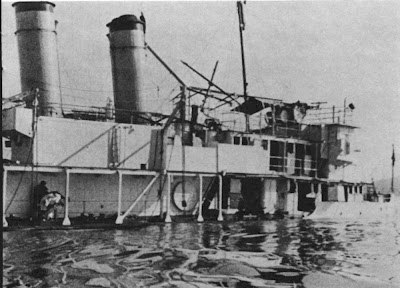
The riverboat and three oil steamers Mei Ping, Mei An and the Mei Hsia came under fire from nine A4N. Two bombs from a B4Y also hit the Panay.
Of the Sailors on board, three were killed and twenty seven of the remaining forty-three were injured. Five civilians were also aboard including newsmen from Movietone and Universal News.
Many of the men swam to the Ohau, an American craft nearby. The Royal Navy also had the HMS Ladybird and the HMS Bee nearby that assisted with the wounded.
The Japanese have said that they saw no flags designating the ship as American. They are calling this an accident and do not wish any hostility with the United States.

The riverboat and three oil steamers Mei Ping, Mei An and the Mei Hsia came under fire from nine A4N. Two bombs from a B4Y also hit the Panay.
Of the Sailors on board, three were killed and twenty seven of the remaining forty-three were injured. Five civilians were also aboard including newsmen from Movietone and Universal News.
Many of the men swam to the Ohau, an American craft nearby. The Royal Navy also had the HMS Ladybird and the HMS Bee nearby that assisted with the wounded.
The Japanese have said that they saw no flags designating the ship as American. They are calling this an accident and do not wish any hostility with the United States.
Monday, December 10, 2007
Japanese attack Nanking
The Japanese have engaged in a siege on the city of Nanking (南京). Outside the city, 1 million Japanese troops wait for a reply to the many leaflets dropped over the city demanding a surrender.
Currently, there is an agreement among the Japanese not to shell portions of the city not occupied by Chinese military.
Many of the foreigners in the city have fled but 22 remain behind. They have formed a Safety Zone of some kind to protect themselves. They are calling themselves the International Committee with German businessman John Rabe as their leader.
Recently, the Japanese Emperor Hirohito, has relieved the Japanese military of the required international laws for treatment of Prisoners of War. The Japanese troops are not even allowed to call the Chinese soldiers they have captured Prisoners of War.
Currently, there is an agreement among the Japanese not to shell portions of the city not occupied by Chinese military.
Many of the foreigners in the city have fled but 22 remain behind. They have formed a Safety Zone of some kind to protect themselves. They are calling themselves the International Committee with German businessman John Rabe as their leader.
Recently, the Japanese Emperor Hirohito, has relieved the Japanese military of the required international laws for treatment of Prisoners of War. The Japanese troops are not even allowed to call the Chinese soldiers they have captured Prisoners of War.
Friday, November 16, 2007
Further Battling in China
Colonel Ott, a German advisor to the Chinese, has stated that the Japanese are lucky that the Germans are still there. otherwise, it is likely they'd be replaced by Soviet ones. Their continued presence also helps to protect the German citizens who remain in the country. If the officials were to leave, it is believed that the Chinese would be rather harsh against these citizens abroad.
In China there remains citizens of several countries such as Great Britain, of course, France, the US and Japan. Many of these citizens are claiming their extraterritorial rights to protect them from the prolonged fighting.
The Japanese remain unchecked in Northern China. The Japanese commander, Lieutenant General Seishiro Itagaki, while his motorized divisions roared over a Chinese strategic highway built by famed "Model Governor" Yen Hsi-shan of Shansi, announced: "We are pursuing the disorganized Chinese troops so fast that they are unable to reform their lines in the strong positions which they had prepared earlier in anticipation of their retreat."
The Japanese while fighting the battle for Shanghai, are also having to contend with uprising in Manchukuo. The weather has been cold enough to freeze the marshes and swamps of Manchukuo allowing for easy transportation of mechanized vehicles.
In China there remains citizens of several countries such as Great Britain, of course, France, the US and Japan. Many of these citizens are claiming their extraterritorial rights to protect them from the prolonged fighting.
The Japanese remain unchecked in Northern China. The Japanese commander, Lieutenant General Seishiro Itagaki, while his motorized divisions roared over a Chinese strategic highway built by famed "Model Governor" Yen Hsi-shan of Shansi, announced: "We are pursuing the disorganized Chinese troops so fast that they are unable to reform their lines in the strong positions which they had prepared earlier in anticipation of their retreat."
The Japanese while fighting the battle for Shanghai, are also having to contend with uprising in Manchukuo. The weather has been cold enough to freeze the marshes and swamps of Manchukuo allowing for easy transportation of mechanized vehicles.
German advisors remain
Despite a pact against Communism between Japan and Germany, Adolf Hitler has not withdrawn his advisors to the Chinese military. They continue to help the Chinese strategize against the Japanese attacks.
Conference Concludes
The conference concluded yesterday in Brussels with a chiding of the Japanese as an aggressor. The sanctions Kai-shek was hoping for are likely to only come from the United States.
Things at the Wufu line get worse. The officials who were supposed to be there to meet the exhausted Chinese troops had fled. Chinese forces have been unable to use the facilities for defense thus far.
Things at the Wufu line get worse. The officials who were supposed to be there to meet the exhausted Chinese troops had fled. Chinese forces have been unable to use the facilities for defense thus far.
Thursday, November 15, 2007
Chinese withdraw to the Wufu Line
As the conference in Brussels continues, the Chinese have now had to retreat to the Wufu Line. The Chinese have little left to use to fight against the Japanese and the frontline is near collapse.
They have recently lost the town of Kunshun. There is also a severe shortage of ammunition.
There are reports of disarray in the withdrawal.
They have recently lost the town of Kunshun. There is also a severe shortage of ammunition.
There are reports of disarray in the withdrawal.
Friday, November 9, 2007
Nine-Power Conference Continues; Chinese lose more
 The Nine-Power Conference continues in Brussels with Germany, Italy and Japan refusing to attend.
In the meantime, the Chinese have taken heavy losses. The Japanese were able to make landings at Jinshanwei in Northern China on November 5th.
On November 8th, the Chinese Central Command issued a retreat from Shanghai despite the ongoing conference. Chiang Kai-shek continues to hope that the conference will do something to contain Japan.
Sunday, November 4, 2007
Nine Powers convene in Brussels
With the Japanese closing in on the Chinese in Shanghai, western powers decided to hold a conference in Brussels to discuss possible intervention.
The nine nations are those who signed the agreement of the Open Door Policy on February 6, 1922. These nine nations include Great Britain, France, Portugal, Belgium, Italy, Japan, China, The United States and the Netherlands. The treaty has not been very effective. Six years ago with the invasion of Manchuria, the United States could do little more than impose economic sanctions on Japan.
Many of the other Chinese troops have withdrawn to the other side of the Suzhou Creek where fighting remains intense. Chiang Kai-shek continues to stay in Shanghai during the conference.
The nine nations are those who signed the agreement of the Open Door Policy on February 6, 1922. These nine nations include Great Britain, France, Portugal, Belgium, Italy, Japan, China, The United States and the Netherlands. The treaty has not been very effective. Six years ago with the invasion of Manchuria, the United States could do little more than impose economic sanctions on Japan.
Many of the other Chinese troops have withdrawn to the other side of the Suzhou Creek where fighting remains intense. Chiang Kai-shek continues to stay in Shanghai during the conference.
Monday, October 29, 2007
Hard Fighting at Suzhou Creek
The situation at Suzhou Creek looks grim. The strength of the Chinese forces is little compared to the Japanese forces. Many divisions are depleted to only one or two regiments.
Chiang Kai-shek came to the battlefield and seemed to boost morale for a short period.
Chiang Kai-shek came to the battlefield and seemed to boost morale for a short period.
Saturday, October 27, 2007
Dachang falls
Dachang has finally fallen to the Japanese. It was the last suburban town lying between the Japanese forces and the Chinese fortified within Shanghai.
The two sides engaged in many seesaw battles over the past few weeks. The frontline of the battle has only managed to move 5 Kilometers with the Japanese making the gains. The Chinese have so far, never been able to capitalize 0n Japanese vulnerabilities.
The fighting has been so intense that the rate of casualties an hour for the Chinese has reportedly been in the thousands. Some divisions have been wiped out in a matter of days.
On October 25th, however, Dachang fell to the Japanese. In the course of last night, the Chinese began to withdraw from Shanghai, particularly its downtown which they've held for the better part of three months.
The two sides engaged in many seesaw battles over the past few weeks. The frontline of the battle has only managed to move 5 Kilometers with the Japanese making the gains. The Chinese have so far, never been able to capitalize 0n Japanese vulnerabilities.
The fighting has been so intense that the rate of casualties an hour for the Chinese has reportedly been in the thousands. Some divisions have been wiped out in a matter of days.
On October 25th, however, Dachang fell to the Japanese. In the course of last night, the Chinese began to withdraw from Shanghai, particularly its downtown which they've held for the better part of three months.
Saturday, October 6, 2007
US President calls for Quarantine
The President of the United States of America, Franklin Delano Roosevelt, gave a speech in Chicago yesterday. In it, he proposed a "quarantine of the aggressor nations" such as Japan and Italy.
The prevailing political thought right now in the United States is one of neutrality and isolationism. The Neutrality Act, signed on August 31, 1935, forbid the US from shipping arms of ammunition to Italy or Abyssinia, though that crisis has ended.
Mr. Roosevelt seems to be suggesting economic measures be taken against aggressor nations rather than reacting to aggression with aggression. In other words, put water on the fire, not more fire!
The prevailing political thought right now in the United States is one of neutrality and isolationism. The Neutrality Act, signed on August 31, 1935, forbid the US from shipping arms of ammunition to Italy or Abyssinia, though that crisis has ended.
Mr. Roosevelt seems to be suggesting economic measures be taken against aggressor nations rather than reacting to aggression with aggression. In other words, put water on the fire, not more fire!
Wednesday, October 3, 2007
The Chinese withdraw to keep Dachang
Since the fall of Luodian, the frontline of the battle has moved southward to the town of Dachang (大場). There the Chinese hope to maintain some sort of continued communication between themselves the the troops in downtown Shanghai.
The Japanese have increased their numbers to 200,000 given the intensity they faced from 300,000 Chinese at Luodian. Chiang Kai-shek mobilized whatever troops he could scrape up for the defense of Dachang.
After invading the town of Liuhang, the Japanese have managed to push the frontline back further to the Yunzaobin River (蘊藻濱).
The Japanese have increased their numbers to 200,000 given the intensity they faced from 300,000 Chinese at Luodian. Chiang Kai-shek mobilized whatever troops he could scrape up for the defense of Dachang.
After invading the town of Liuhang, the Japanese have managed to push the frontline back further to the Yunzaobin River (蘊藻濱).
Monday, October 1, 2007
Luodian falls

Despite numerical supremacy, the outgunned Chinese have proven to be no match for the Japanese Navy and the firepower the Japanese forces have employed thus far.
The fighting at Luodian has been intense. The Chinese seemed to refuse to change their tactics despite the technological superiority of the Japanese.
There are few Chinese left. It is estimated that over 50% of the Chinese troops sent there to hold the Japanese back have perished. The Chinese have been forced to withdraw from Luodian.
It has been reported that Luodian is now being call the grinding mill of flesh and blood.
Wednesday, September 12, 2007
The Battle moves to Luodian
The Chinese have now taken up strategic positions around Luodian (羅店) in hopes of stopping the Japanese forces. This small town is an important connection between the recently fallen Baoshan and downtown Shanghai.
The Chinese troops have actually managed to increase their numbers. They now outnumber the Japanese troops 3 to 1.
The Chinese troops have actually managed to increase their numbers. They now outnumber the Japanese troops 3 to 1.
Sunday, September 9, 2007
Continued fighting in Shanghai
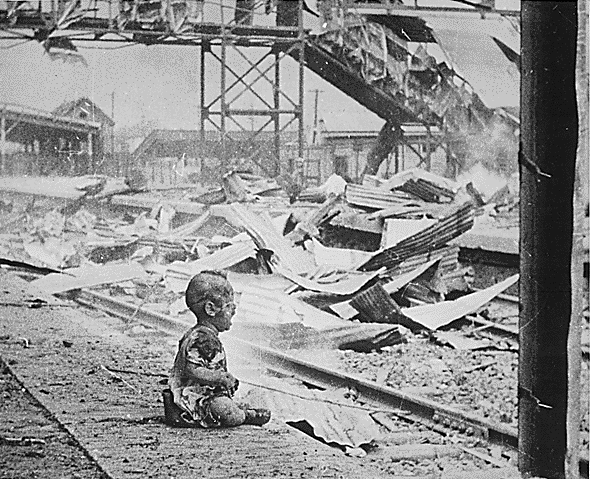 The Chinese have fought valiantly against the Japanese invasion at the port of Shanghai. They lack many of the weapons needed to beat back the amphibious assault and have mostly small arms to work with.
In many of the smaller coastal towns the Japanese have managed to gain control during the day with aid from Naval bombardments. Chinese counter attacks have then been able to regain control of many of these towns in the night.
Recently, on September 6th, the town of Baoshan. The 98th Division was ordered to protect the town. One particular battalion as reportedly suffered such losses that only one man remains alive.
Saturday, August 25, 2007
Japanese Reinforcements to Shanghai
Japan has now sent more troops to the city of Shanghai. This port city represents a great deal of importance to imperial Japan. The Japanese Expeditionary Force is led by Iwane Matsui and they landed at Liuhe, Wusong and Chuanshakou on August 23rd.
Chang Kai-shek seems to have anticipated an assault on these vulnerable coastal districts. He has reinforced them with the Chinese 18th Army. The Japanese Navy is also using its bombardment abilities to the fullest extent.
Chang Kai-shek seems to have anticipated an assault on these vulnerable coastal districts. He has reinforced them with the Chinese 18th Army. The Japanese Navy is also using its bombardment abilities to the fullest extent.
Subscribe to:
Posts (Atom)