Last night, in four large cities of the USSR, there were rallies in protest of the pogroms of last month in Germany and Austria as well as growing violence against Jews in France and Poland.
The Rallies were held in Odessa, Kiev, Leningrad and Moscow itself. The Soviet Police did not interfere with the protests.
Showing posts with label Poland. Show all posts
Showing posts with label Poland. Show all posts
Friday, November 28, 2008

Tuesday, November 25, 2008
Nuremberg Laws in Danzig
Yesterday, the Free City of Danzig was officially dominated by the Nazi Party from Germany. This was enacted by a vote of the Danzig Senate. This does not include the eastern neighbor Poland.
The Nuremberg Laws passed by the Nazis in the fall of 1935 are now in force in Danzig and applies to Jews regardless of nationality. The Nazi organ Vorposten, commenting on the action, ironically hopes that the Poles will be grateful to the Danzig government for its efforts to secure "racial purity" for the Free City's inhabitants.
Warsaw, however, does not see the situation in that light. It is understood that the Poles are preparing to protest this new discrimination.
The anti-Semitic drive, which began with the German excesses, continues unabated. Several Jewish-owned stores, which had reopened, closed again after the police had indicated that their reopening was a "provocation".
More than 100 Jews have been arrested during the last three days. Those who seemingly were Polish citizens were sent across the frontier. Many of them were arrested on the Polish side as deserters from the Army.
Danzig's great synagogue, damaged in the recent rioting, now is being torn down to enable the extension of the police station.
The adoption of the Nuremberg Laws is a violation of the Free City's constitution guaranteed by the League of Nations, but Commissioner Carl J. Burckhardt de Reynold is not expected to take any action. in fact, he is understood to be disillusioned and wishes to resign. The Nazis, naturally, would welcome the event.
One month ago there were widespread pogroms against Jews throughout the city-state.
The Nuremberg Laws passed by the Nazis in the fall of 1935 are now in force in Danzig and applies to Jews regardless of nationality. The Nazi organ Vorposten, commenting on the action, ironically hopes that the Poles will be grateful to the Danzig government for its efforts to secure "racial purity" for the Free City's inhabitants.
Warsaw, however, does not see the situation in that light. It is understood that the Poles are preparing to protest this new discrimination.
The anti-Semitic drive, which began with the German excesses, continues unabated. Several Jewish-owned stores, which had reopened, closed again after the police had indicated that their reopening was a "provocation".
More than 100 Jews have been arrested during the last three days. Those who seemingly were Polish citizens were sent across the frontier. Many of them were arrested on the Polish side as deserters from the Army.
Danzig's great synagogue, damaged in the recent rioting, now is being torn down to enable the extension of the police station.
The adoption of the Nuremberg Laws is a violation of the Free City's constitution guaranteed by the League of Nations, but Commissioner Carl J. Burckhardt de Reynold is not expected to take any action. in fact, he is understood to be disillusioned and wishes to resign. The Nazis, naturally, would welcome the event.
One month ago there were widespread pogroms against Jews throughout the city-state.
Freemasonry Dissolved in Poland
A decree was issued yesterday dissolving Freemasonry in Poland. Its properties were confiscated and the proceeds of the sale will be handed over to charity.
Attempts to revive the masonic movement, the establishment of clandestine lodges, and so forth, will make those involved liable to five years' imprisonment and heavy fine.
Dissolution of the ladges was ordered by the Masonic leaders themselves a few moths ago when a violent anti-Masonic campaign was launched in the Sejm. The Government issued a decree to silence persons form all ranks who would probably have raised the Masonic issue again the new Parliament.
Attempts to revive the masonic movement, the establishment of clandestine lodges, and so forth, will make those involved liable to five years' imprisonment and heavy fine.
Dissolution of the ladges was ordered by the Masonic leaders themselves a few moths ago when a violent anti-Masonic campaign was launched in the Sejm. The Government issued a decree to silence persons form all ranks who would probably have raised the Masonic issue again the new Parliament.
Monday, November 24, 2008
Seven Americans get Awards by Hitler
Seven Americans, including four University Professors and one lawyer, were awarded the merit cross of the Order of the German Eagle today by Chancellor Adolf Hitler.
Three of the professors, William Alpha Cooper, Karl Frederick Geiser and Frederick K. Krueger, received the order in the first degree. Professor Ralph Haswell Lutz, Fritz Hailer, a lawyer amd F.W. Elven received it in the second degree and E.C. Miller in the third.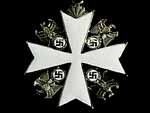
Dr. William Alpha Cooper is professor Emeritus of Germanic Languages of Stanford University, California, having retired in 1934. He was born in Batesville, Ohio, in 1868. He studied at some point at the University of Bonn in Germany, the University of Leipzig and the University of Berlin. In 1934 he received an honorary degree from the University of Cologne.
He was for many years on the Stanford faculty and is a member of a number of American and German philological associations. In 1908 he translated Bielschowky's "Life of Goethe".
Dr Karl Frederick Geiser, a native of Iowa, has been a Professor of Political Science at Oberlin College, Oberlin, Ohio, where he resides since 1908. He has been teaching since 1893. He was a lecturer in Berlin, Marburg, Goettingen, Muenster, Danzig and Koenigsberg Universities in Germany during 1936 and 1937.
His "Democracy Versus Autocracy" was published in 1918 and in 1934 he published "American political ideals" in the German language.
Dr. Frederick Konrad Krueger, Professor of Political Science since 1923 at Wittenberg College in Springfield, Ohio, was born in Kottbus, Germany, in 1887. He studied at the University of Berlin and Tubingen University in Germany. He was naturalized as an American citizen in 1930.
He has been an exchange professor at Goettingen, Germany. He is the author of works in German and English, including "Government and Politics of the German Empire" (1915), and is a contributor to the encyclopedias of articles on Germany.
Dr. Ralph Haswell Lutz, a well-known historian is chairman of the Hoover War Library of Stanford University and dean of graduate study at Stanford. He is a native of Ohio and took his PhD at Heidelberg, Germany in 1910.
He served with the American Forces during the World War as first lieutenant of infantry, and was later in the American Military Mission in Berlin, the Supreme Economic Council in Paris and the special mission to Poland.
In a speech in Berlin in 1934, Dr. Krueger attacked the American press for making "no effort to understnad the new German soul or to play fair". He described the boycott of German goods as "a crime against America". He further went on to say that "[s]ome day America will be forced to deal with the problem presented by the Jew". He was then lecturing at the Nazi Academy for Political Sciences.
Three of the professors, William Alpha Cooper, Karl Frederick Geiser and Frederick K. Krueger, received the order in the first degree. Professor Ralph Haswell Lutz, Fritz Hailer, a lawyer amd F.W. Elven received it in the second degree and E.C. Miller in the third.

Dr. William Alpha Cooper is professor Emeritus of Germanic Languages of Stanford University, California, having retired in 1934. He was born in Batesville, Ohio, in 1868. He studied at some point at the University of Bonn in Germany, the University of Leipzig and the University of Berlin. In 1934 he received an honorary degree from the University of Cologne.
He was for many years on the Stanford faculty and is a member of a number of American and German philological associations. In 1908 he translated Bielschowky's "Life of Goethe".
Dr Karl Frederick Geiser, a native of Iowa, has been a Professor of Political Science at Oberlin College, Oberlin, Ohio, where he resides since 1908. He has been teaching since 1893. He was a lecturer in Berlin, Marburg, Goettingen, Muenster, Danzig and Koenigsberg Universities in Germany during 1936 and 1937.
His "Democracy Versus Autocracy" was published in 1918 and in 1934 he published "American political ideals" in the German language.
Dr. Frederick Konrad Krueger, Professor of Political Science since 1923 at Wittenberg College in Springfield, Ohio, was born in Kottbus, Germany, in 1887. He studied at the University of Berlin and Tubingen University in Germany. He was naturalized as an American citizen in 1930.
He has been an exchange professor at Goettingen, Germany. He is the author of works in German and English, including "Government and Politics of the German Empire" (1915), and is a contributor to the encyclopedias of articles on Germany.
Dr. Ralph Haswell Lutz, a well-known historian is chairman of the Hoover War Library of Stanford University and dean of graduate study at Stanford. He is a native of Ohio and took his PhD at Heidelberg, Germany in 1910.
He served with the American Forces during the World War as first lieutenant of infantry, and was later in the American Military Mission in Berlin, the Supreme Economic Council in Paris and the special mission to Poland.
In a speech in Berlin in 1934, Dr. Krueger attacked the American press for making "no effort to understnad the new German soul or to play fair". He described the boycott of German goods as "a crime against America". He further went on to say that "[s]ome day America will be forced to deal with the problem presented by the Jew". He was then lecturing at the Nazi Academy for Political Sciences.
Sunday, November 23, 2008
Czech Jew will not be forced to return home
A Czech Jew here illegally, will not be forced to return home to Nazi-held Czechoslovakia.
Federal Judge Philip L. Sullivan granted a writ of Habeas Corpus to the Jew, Solomon Weinberg and then freed him from custody. His Honor stated that to deport the Jew to Central Europe at the present time would be "cruel and unusual punishment".
Mr. Weinberg, 31, was born in a part of the late Hapsburg Empire that became Czechoslovakia. He immigrated to the United States in August, 1927, while employed on the liner Berlin. After missing the ship, he remained here.
He used another man's identity to acquire a passport to visit his dying mother in Poland in 1931. In May of 1932 he returned without a legal visa. He was married in June of 1936 in California but is now separated from his wife.
He was arrested this past June and deportation hearings were arranged soon after. The Judge who heard his case pointed out that Mr. Weinberg has always supported himself and never required state assistance.
He also stated "I do not believe the immigration laws contemplate and such strict compliance with the letter as would oblige the court to return a Jew to a country where his property would be confiscated and his life might be in jeopardy".
Unless Attorney General Homer S. Cummings decides to appeal the case, Judge Sullivan's decision will permit Mr Weinberg to remain in the this country.
Federal Judge Philip L. Sullivan granted a writ of Habeas Corpus to the Jew, Solomon Weinberg and then freed him from custody. His Honor stated that to deport the Jew to Central Europe at the present time would be "cruel and unusual punishment".
Mr. Weinberg, 31, was born in a part of the late Hapsburg Empire that became Czechoslovakia. He immigrated to the United States in August, 1927, while employed on the liner Berlin. After missing the ship, he remained here.
He used another man's identity to acquire a passport to visit his dying mother in Poland in 1931. In May of 1932 he returned without a legal visa. He was married in June of 1936 in California but is now separated from his wife.
He was arrested this past June and deportation hearings were arranged soon after. The Judge who heard his case pointed out that Mr. Weinberg has always supported himself and never required state assistance.
He also stated "I do not believe the immigration laws contemplate and such strict compliance with the letter as would oblige the court to return a Jew to a country where his property would be confiscated and his life might be in jeopardy".
Unless Attorney General Homer S. Cummings decides to appeal the case, Judge Sullivan's decision will permit Mr Weinberg to remain in the this country.
Sunday, November 9, 2008
Ernst vom Rath dead from wounds
Ernst vom Rath was unable to recover from five gunshots he sustained from an attempted political assasination. He passed away while being cared for in a Paris hospital moments ago.
Polish Jew Herschel Grynszpan claimed it was in retaliation for 12,000 Polish Jews being treated extremely poorly in the Polish border town of Zbąszyń. The Polish Jews are in Zbąszyń and the German-Polish border due to a decision by the Polish Government to end the citizenship of Poles living outside Poland for longer than five years.
Grynszpan is still in French custody. He has made accusations that the deceased was a homosexual.
The Nazi Party has reacted harshly to the events in Paris.
Polish Jew Herschel Grynszpan claimed it was in retaliation for 12,000 Polish Jews being treated extremely poorly in the Polish border town of Zbąszyń. The Polish Jews are in Zbąszyń and the German-Polish border due to a decision by the Polish Government to end the citizenship of Poles living outside Poland for longer than five years.
Grynszpan is still in French custody. He has made accusations that the deceased was a homosexual.
The Nazi Party has reacted harshly to the events in Paris.
Saturday, November 8, 2008
German diplomat shot in Paris
Ernst vom Rath, a 29-year-old Nazi who was posted in the German Embassy in Paris, was shot last night.
The perpetrator was a Polish Jew, Herschel Grynszpan. The 17-year-old used a gun to shoot vom Rath five times in the abdomen. At the time of the shooting, he claimed it was for 12,000 Jews stranded on the German-Polish Border town of Zbąszyń.
The victim is still alive. He is in the hospital and in critical condition.

The perpetrator was a Polish Jew, Herschel Grynszpan. The 17-year-old used a gun to shoot vom Rath five times in the abdomen. At the time of the shooting, he claimed it was for 12,000 Jews stranded on the German-Polish Border town of Zbąszyń.
The victim is still alive. He is in the hospital and in critical condition.
Friday, October 31, 2008
Polish Jews at the German-Polish Border
Some of the Polish Jews deported by Germany have been accepted into Poland. The Polish authorities seem helpless as to what to with them.
Reports have surfaced that there is not enough to feed the 12,000 Jews in the border town of Zbąszyń. Some are forced to sleep in horse stables still filthy with horse dung.
Reports have surfaced that there is not enough to feed the 12,000 Jews in the border town of Zbąszyń. Some are forced to sleep in horse stables still filthy with horse dung.
Wednesday, October 29, 2008
Polish Jews deported to German-Polish Border
Germany has rounded up an estimated 15,000 Polish Jews and placed them on trains. They are being sent back to Poland. The Polish Government has refused to take them.
The German Government, remembering full well the results of the Évian Conference when no nation stepped up to take Jewish populations, is anxious to get rid of these Polish Jews. With their citizenship set to expire due to a Polish stipulation on passports and length of time outside Poland, they would become stateless and Germany's responsibility.
Regardless of Poland's refusal, the Germany gathered the Jews and have forced them to leave their homes in Germany. The trains are taking many thousands of them to Zbąszyń, a village on the frontier and also the village of Beuthen.
Polish passports must be revalidated by October 29th, today, for the Jews to be allowed to re-enter their homeland.
The German Government, remembering full well the results of the Évian Conference when no nation stepped up to take Jewish populations, is anxious to get rid of these Polish Jews. With their citizenship set to expire due to a Polish stipulation on passports and length of time outside Poland, they would become stateless and Germany's responsibility.
Regardless of Poland's refusal, the Germany gathered the Jews and have forced them to leave their homes in Germany. The trains are taking many thousands of them to Zbąszyń, a village on the frontier and also the village of Beuthen.
Polish passports must be revalidated by October 29th, today, for the Jews to be allowed to re-enter their homeland.
Tuesday, October 28, 2008
Polish Jews arrested in Germany
Polish Jews who've lived outside Poland too long will lose their citizenship in three days. The German government has tried to negotiate the removal of these Poles back to Poland. Poland refuses to allow them entry back into their homeland.
Since Poland is unwilling to take them, an order went out from Berlin last night to arrest all Polish Jews within 48 hours. It is unclear where the Polish Jews will go.
Since Poland is unwilling to take them, an order went out from Berlin last night to arrest all Polish Jews within 48 hours. It is unclear where the Polish Jews will go.
Sunday, October 26, 2008
Lipski leaves Bertesgaden
Polish Ambassador Józef Lipski and German Foreign Minister Joachim von Robbentrop have had their meeting in the mountain retreat at Bertesgaden. Ambassador Lipski left yesterday after the one day meeting. The topic of discussion was indeed the Free City of Danzig. Ribbentrop demanded that Poland agree to Germany's annexation of the Free City of Danzig. Lipski refused.
The Free City of Danzig is administered by the League of Nations in accordance with the stipulation in Part III, Section XI of the Treaty of Versaille in 1919. Citizens of Danzig opposed this at the time.
The Free City of Danzig is administered by the League of Nations in accordance with the stipulation in Part III, Section XI of the Treaty of Versaille in 1919. Citizens of Danzig opposed this at the time.
Saturday, October 25, 2008
Lipski meeting with Ribbentrop
Polish Ambassador to Germany, Józef Lipski, travelled to Bertesgaden yesterday to meet with German Foreign Minister Joachim Ribbentop. The topic of discussion is reportedly the Free City of Danzig.
The Free City of Danzig, a Baltic Sea port, was created on 10 January 1920, against the wishes of the local population but in accordance with the terms of Part III, Section XI of the Treaty of Versailles of 1919.
The Free City includes the city of Danzig and over two hundred nearby towns, villages, and settlements, all of which had been a part of the former German Empire. As the League of Nations decreed, the region is to remain separate from the nation of Germany, as well as the newly-resurrected nation of Poland. The Free City is not autonomous; it is under League of Nations "protection" and put into a binding customs union with Poland.
Poland also has other, special utilization rights towards the city. A peninsula, Westerplatte, is a munitions dumping ground as well as a military post. Poland also has a Post Office there and other support services.
Yesterday, October 24 is also the 17th anniversary of the Treaty of Warsaw.
The Free City of Danzig, a Baltic Sea port, was created on 10 January 1920, against the wishes of the local population but in accordance with the terms of Part III, Section XI of the Treaty of Versailles of 1919.
The Free City includes the city of Danzig and over two hundred nearby towns, villages, and settlements, all of which had been a part of the former German Empire. As the League of Nations decreed, the region is to remain separate from the nation of Germany, as well as the newly-resurrected nation of Poland. The Free City is not autonomous; it is under League of Nations "protection" and put into a binding customs union with Poland.
Poland also has other, special utilization rights towards the city. A peninsula, Westerplatte, is a munitions dumping ground as well as a military post. Poland also has a Post Office there and other support services.
Yesterday, October 24 is also the 17th anniversary of the Treaty of Warsaw.
Thursday, October 9, 2008
Hungary and Poland take land
Both Hungarian and Polish troops have moved into parts of Czecho-Slovakia to take the lands they both desire. There are reports of small skirmishes along the borders.
Monday, October 6, 2008
Poland revokes passports
Poland made the decision today to revoke passports from Polish citizens living abroad for longer than five years. This becomes effective October 31st.
Saturday, October 4, 2008
Sudeten Germans welcome Nazis & Wehrmacht
 After the Munich Agreement on September 30th, the already mobilized German Army began moving into the country. One of the first towns taken has been Eger, the site of much fighting in late September between Czechoslovakian troops and Nazi sympathizers.
The Czech people have much to be sad about. They lose 3.5 million citizens but also has lost 70% of its iron and steel, 70% of its electrical power and the famous Škoda Works. Even the very name of the young state has been changed: Czecho-Slovakia.
President Benes has had the the military print the march orders for his army and put the press on standby for a declaration of war. The nation is not giving in quite as easily as the major European powers would like.
Sudeten Germans have been jubilant and celebratory since the Munich Agreement was
 announced. Seemingly from nowhere Nazi flags and banners bearing the red, black and white colors and Swastika appeared in windows, on homes, businesses and on streetpoles. Children have notably been excited and have not been in schools since the announcement.
Two days ago Hitler marched unopposed into the Sudetenland. He said that it was the start of a 1000-year German Reich.
Polish troops continue to occupy Teschen as well.
Friday, October 3, 2008
Germany begins taking the Sudeten
 So, after all those weeks of mounting tension over the fate of the Sudetens, it’s finally being resolved: German troops have begun occupying the Sudetenland. Polish troops have also moved into Teschen, and the Czech government has agreed to let a mixed commission decide the fate of the territory claimed by Hungary. The dismemberment of Czechoslovakia has begun.
Wednesday, October 1, 2008
Reactions in Great Britain to the Munich Agreement
After the return of the Prime Minister and news of the Agreement reached in Munich, there has been an air of jubilation throughout the British Empire. Lauds are being made at the honor of Great Britain, France, Italy and even Germany. The Lord Mayor of the Welsh city of Cardiff, O. C. Purnell has ordered that the flags of Italy, France and even the Swastika be flown over the city to honor these nations.
In spite of the joy that is in the air after the momentous event, there are detractors. The First Lord of the Admiralty Alfred Duff Cooper, 1st Viscount Norwich has resigned from his position due to the Munich Agreement. He criticised the Prime Minister for employing an Appeasement policy which is just as a effective as losing a war.
The King has accepted the resignation and noted that despite his acceptance of the resignation that he had enormous respect for Lord Cooper for standing by his convictions but that he is unable to agree with them.
It might seem churlish to express any doubts about the Munich agreement, given this tremendous outpouring of gratitude and relief. But doubts there are. Of course, having accepted, under enormous pressure, the terms of an agreement dismembering their country that they were not party to, the Czechs are none too happy about it: there have been massive protests in the streets of Prague. (The authorities had to blackout the streets in order to get them to disperse).
In Britain, Sir Norman Angell calls the agreement a ‘disgraceful sacrifice of innocent third parties’ and Robert Boothby, Conservative MP, calls it a victory for force. Sinclair, leader of the Liberals, says that ‘if war has been averted, peace has not yet been established’. For Leo Amery, the respite from war might be only brief, and should be used to bring in national service at once. The leader-writer of the Manchester Guardian admits that even if a war had been fought, there was no way that Czechoslovakia’s borders could remain as they were. But it remains to be seen whether Hitler is sincere in his desire for peaceful territorial revisions. And nobody who reads the terms carefully ‘can feel other than unhappy’, so harsh are they.
The London correspondent says that ‘At first it seemed like Armistice Day. The resemblance soon passed, but it is peace, however high the price and whoever has had to pay it’. The ARP and defence measures already taken are to remain in place, but nothing further will be done for now. Boxes for gas masks are to be procured and distributed, however! And Poland still wants Teschen, and it seems Czechoslovakia is unwilling to give it up.
Mussolini has also extended an invitation to Chamberlain to visit Rome. It is believed that similar accords can be made between the British Empire and the Fascist Italian State.
In spite of the joy that is in the air after the momentous event, there are detractors. The First Lord of the Admiralty Alfred Duff Cooper, 1st Viscount Norwich has resigned from his position due to the Munich Agreement. He criticised the Prime Minister for employing an Appeasement policy which is just as a effective as losing a war.
The King has accepted the resignation and noted that despite his acceptance of the resignation that he had enormous respect for Lord Cooper for standing by his convictions but that he is unable to agree with them.
It might seem churlish to express any doubts about the Munich agreement, given this tremendous outpouring of gratitude and relief. But doubts there are. Of course, having accepted, under enormous pressure, the terms of an agreement dismembering their country that they were not party to, the Czechs are none too happy about it: there have been massive protests in the streets of Prague. (The authorities had to blackout the streets in order to get them to disperse).
In Britain, Sir Norman Angell calls the agreement a ‘disgraceful sacrifice of innocent third parties’ and Robert Boothby, Conservative MP, calls it a victory for force. Sinclair, leader of the Liberals, says that ‘if war has been averted, peace has not yet been established’. For Leo Amery, the respite from war might be only brief, and should be used to bring in national service at once. The leader-writer of the Manchester Guardian admits that even if a war had been fought, there was no way that Czechoslovakia’s borders could remain as they were. But it remains to be seen whether Hitler is sincere in his desire for peaceful territorial revisions. And nobody who reads the terms carefully ‘can feel other than unhappy’, so harsh are they.
The London correspondent says that ‘At first it seemed like Armistice Day. The resemblance soon passed, but it is peace, however high the price and whoever has had to pay it’. The ARP and defence measures already taken are to remain in place, but nothing further will be done for now. Boxes for gas masks are to be procured and distributed, however! And Poland still wants Teschen, and it seems Czechoslovakia is unwilling to give it up.
Mussolini has also extended an invitation to Chamberlain to visit Rome. It is believed that similar accords can be made between the British Empire and the Fascist Italian State.
Tuesday, September 30, 2008
New Riots against Jews in Poland
Another wave of rioting against Polish Jews swept Poland today. No word on damages or casualties.
Agreement in Munich
 An agreement has been made by the leaders of the four powers who met in Munich on September 28th. Today, in the early hours, all four signed the agreement ceding the Sudetenland to the German nation. Also resolved are the territorial cessions to Poland and Hungary. Despite the loss to Czechoslovakia, War has been averted!
What follows is the agreement as signed by the four countries. It is still protested by the USSR's Joseph Stalin due Czechoslovakia's absence.
GERMANY, the United Kingdom, France and Italy, taking into consideration the agreement, which has been already reached in principle for the cession to Germany of the Sudeten German territory, have agreed on the following terms and conditions governing the said cession and the measures consequent thereon, and by this agreement they each hold themselves responsible for the steps necessary to secure its fulfilment:
(1) The evacuation will begin on 1st October.
(2) The United Kingdom, France and Italy agree that the evacuation of the territory shall be completed by the 10th October, without any existing installations having been destroyed, and that the Czechoslovak Government will be held responsible for carrying out the evacuation without damage to the said installations.
(3) The conditions governing the evacuation will be laid down in detail by an international commission composed of representatives of Germany, the United Kingdom, France, Italy and Czechoslovakia.
(4) The occupation by stages of the predominantly German territory by German troops will begin on 1st October. The four territories marked on the attached map will be occupied by German troops in the following order:
The territory marked No. I on the 1st and 2nd of October; the territory marked No. II on the 2nd and 3rd of October; the territory marked No. III on the 3rd, 4th and 5th of October; the territory marked No. IV on the 6th and 7th of October. The remaining territory of preponderantly German character will be ascertained by the aforesaid international commission forthwith and be occupied by German troops by the 10th of October.
(5) The international commission referred to in paragraph 3 will determine the territories in which a plebiscite is to be held. These territories will be occupied by international bodies until the plebiscite has been completed. The same commission will fix the conditions in which the plebiscite is to be held, taking as a basis the conditions of the Saar plebiscite. The commission will also fix a date, not later than the end of November, on which the plebiscite will be held.
(6) The final determination of the frontiers will be carried out by the international commission. The commission will also be entitled to recommend to the four Powers, Germany, the United Kingdom, France and Italy, in certain exceptional cases, minor modifications in the strictly ethnographical determination of the zones which are to be transferred without plebiscite.
(7) There will be a right of option into and out of the transferred territories, the option to be exercised within six months from the date of this agreement. A German-Czechoslovak commission shall determine the details of the option, consider ways of facilitating the transfer of population and settle questions of principle arising out of the said transfer.
(8) The Czechoslovak Government will within a period of four weeks from the date of this agreement release from their military and police forces any Sudeten Germans who may wish to be released, and the Czechoslovak Government will within the same period release Sudeten German prisoners who are serving terms of imprisonment for political offences.
Munich, September 29, 1938.
ADOLF HITLER,
NEVILLE CHAMBERLAIN,
EDOUARD DALADIER,
BENITO MUSSOLINI.
The agreement was signed at 1.30 this morning and the terms of the agreement were issued an hour later.
ADOLF HITLER,
NEVILLE CHAMBERLAIN,
EDOUARD DALADIER,
BENITO MUSSOLINI.
The agreement was signed at 1.30 this morning and the terms of the agreement were issued an hour later.
Monday, September 22, 2008
Hitler's New Demands are Rejected
The French and British Governments have rejected Hitler's demands for Polish and Hungarian territorial transactions.
Subscribe to:
Posts (Atom)